
Sacred Learning
Bahvṛca Upanishad
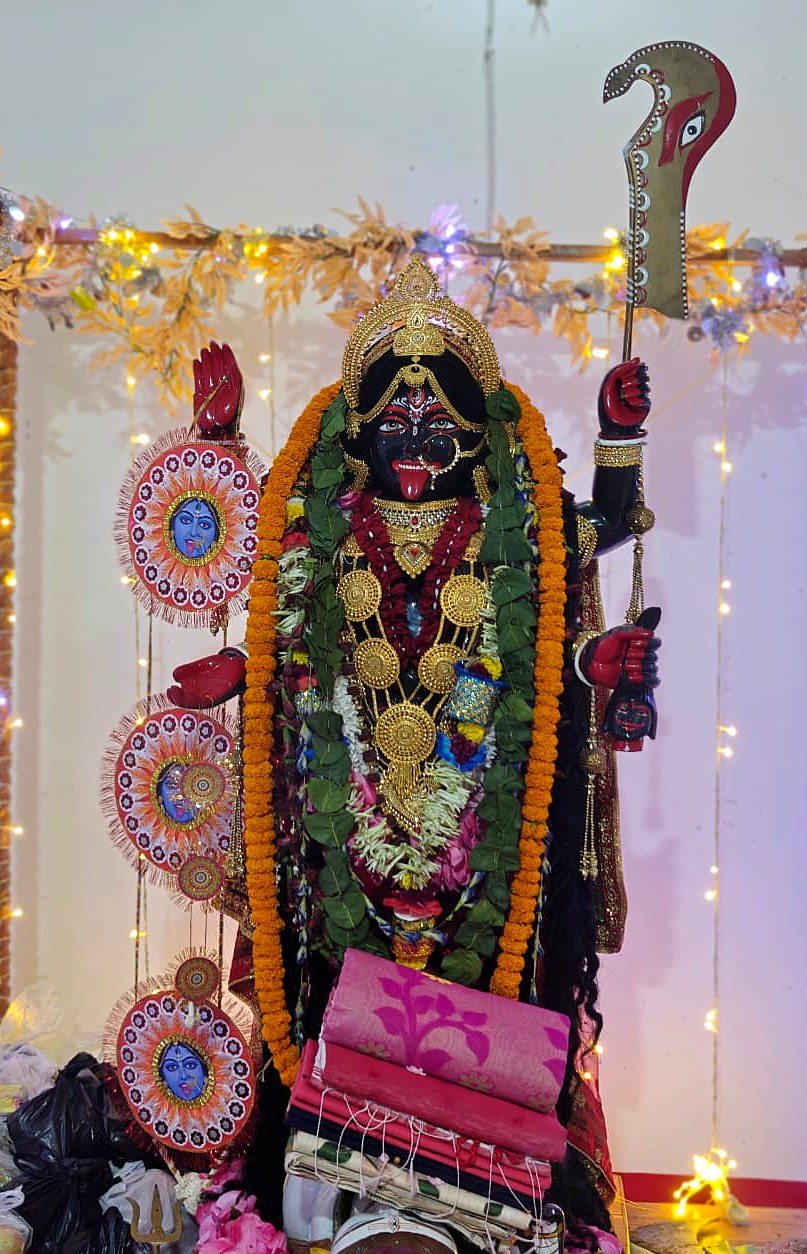
Devī alone is present at the beginning and brings forth the universe.
Bahvṛca Upaniṣad
Devī alone is present at the beginning and brings forth the universe.
- Veda Ṛgveda, in the affiliation used on this site.
- Classification Śākta Upanishad; Muktika 107 here.
- Shape Nine numbered units in the Sanskrit Documents recension, with śānti before and after.
A simple introduction
Bahvṛca leads with a cosmological claim of great force: Devī alone is present at the beginning and brings forth the universe. She is identified with the ground, the substance, and the living appearance of the cosmos — not merely with one domain inside it. The brevity of the recension makes it a strong first text for understanding Śākta nondual theology.
A newcomer can sit with three names the hearing already carries. Devī is the one who is there before the world-egg. Brahman is the vastness with which She is identified. Mahātripurasundarī is a neighbouring Śākta name for the same fullness. Creation language here can function both as cosmology and as a statement about consciousness: the world arises, and awareness recognises its own source.
Nine numbered units sit between peace-invocations in the Sanskrit Documents recension. This introduction keeps to the opening claim so the reader can hear the Goddess as origin before following the named recension through the remaining units of praise and identification. The shortness is a gift: a first theology of the cosmos can be heard in one sitting, then returned to as devotion thickens the same origin.
What the text teaches
Alone at the beginning
The opening claim is cosmological and theological at once: Devī is there before the world appears.
From that solitude She brings forth the universe.
Ground, substance, appearance
She is the ground of the cosmos, its substance, and its living appearance.
The text does not confine Her to one province of the world.
Brahman and Mahātripurasundarī
Devī is heard with Brahman as vastness and with Mahātripurasundarī as a neighbouring fullness.
The names sit beside one another as hearings of one origin.
Creation as consciousness
Creation language can be read as cosmology and as a statement about awareness recognising its source.
Both readings belong to the same short recension.
Brevity as a gift
Nine units make a sitting possible. The force of the opening does not need a long manual to be heard.
Return to the named recension when you want the remaining identifications in order.
How to read it
Hear the opening as a first theology of origin. Let creation language remain both cosmological and inward. The remaining units of praise thicken the same claim; they do not replace it.
Keep the Devī Upanishad nearby. Bahvṛca is the shorter cosmological companion of that answer “I am Brahman.”
Sit with Devī alone at the beginning until the world-egg feels like a statement about consciousness as much as about cosmos. Then follow the nine units in the named recension, where praise continues the same origin in a compact voice.
Key terms
- बह्वृच bahvṛca
- Named for many ṛc verses; this Upanishad’s traditional title.
- देवी devī
- The Goddess present at the beginning.
- ब्रह्मन् brahman
- The vastness with which She is identified.
- महात्रिपुरसुन्दरी mahātripurasundarī
- A neighbouring Śākta name for the same fullness.
- जगत् jagat
- The universe She brings forth.
A passage to begin with
Bahvṛca Upaniṣad 1 (Sanskrit Documents numbering)
देवी ह्येकाग्र एवासीत् । सैव जगदण्डमसृजत् । कामकलेति विज्ञायते । शृंगारकलेति विज्ञायते ॥
The Goddess was one at first. She herself emitted the world-egg. She is known as Kāmakalā. She is known as Śṛṅgārakalā.
Context and connections
Source text
Beside Devī
The Devī Upanishad answers “Who are you?” as Brahman. Bahvṛca hears the same Goddess as the one who emits the world.
Tradition
Śākta nondual origin
Later Śākta tradition hears this brevity as a compact nondual cosmology. That later hearing is named here as tradition.
Meenananda hearing
How this house hears it
This house hears origin as unfolding: life appearing, consciousness appearing, the Goddess already there.
Authentic texts and further reading
- Bahvṛca Upaniṣad, Sanskrit Documents Public-domain Devanagari recension of this Upanishad. Sanskrit (Devanagari) · Public-domain Devanagari recension as posted 2026 Opened 2026-09-20
- Upanishads overview, Vedic Heritage Portal Institutional overview of the Upanishads as Vedānta and Veda-family affiliation. Sanskrit (Devanagari) · Vedic Heritage Portal public page, accessed 2026-09-20 Opened 2026-09-20
- GRETIL register of Indic e-texts Catalogue of Indic e-texts for locating named recensions. Sanskrit (Devanagari) · GRETIL public register Opened 2026-09-20