
Self-knowledge
The lagna and the Moon show how a life tends to begin and to feel. Naming a bhava can make a foggy worry smaller — work, home, study, partnership — without pretending the chart is the person.
Shree Meenananda Foundation
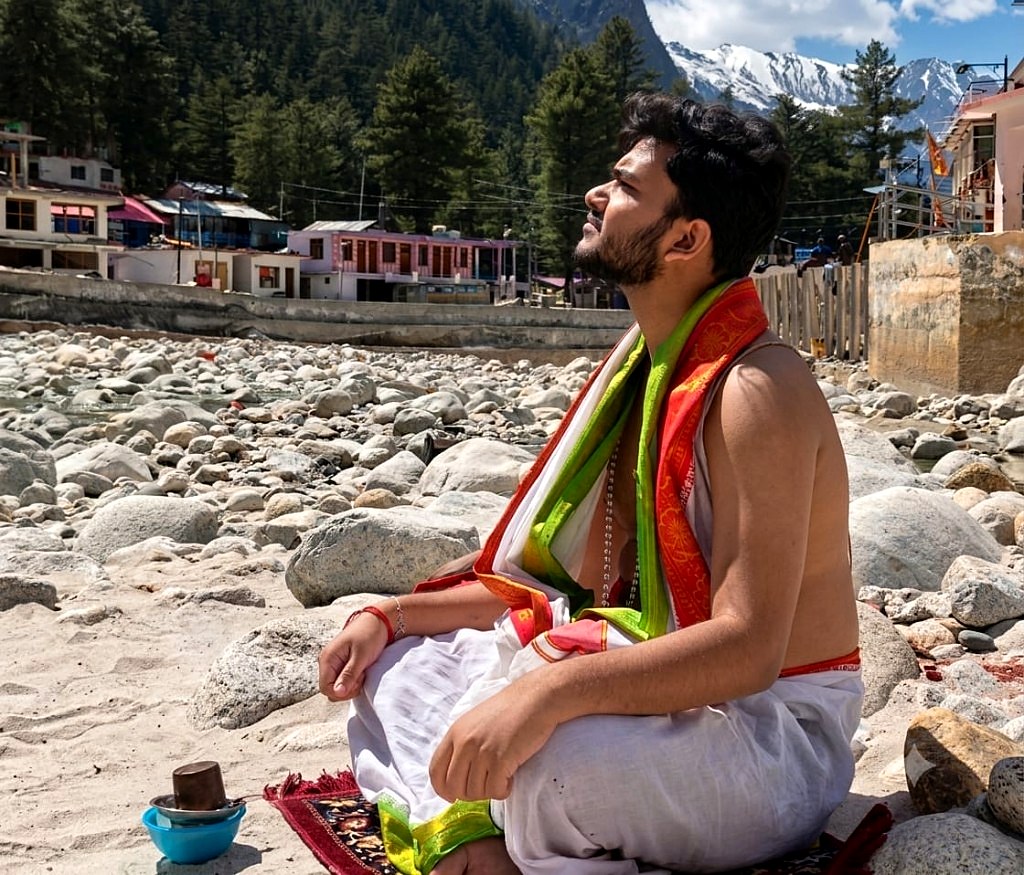
Sit with the map of time. Arko reads a Vedic kundali with those who write or telephone.
Jyotish
Jyotish — the limb of Veda that watches the lights — is an old Indian way of naming time. The janma kundali is a snapshot of grahas against rashis and nakshatras at birth. Arko sits with that map and with your question.
Write birth date, time and place if you have them; they stay in the message, they are not published as a named person’s chart. He answers on the telephone or email you leave. Hours and fees are unpublished here.
There is also a public Vedic horoscope tool on this site, for study of Lagna, rashi, nakshatra and a written sketch. Software is not the Guru, and it is not Arko. A human reading is a conversation. It is not medicine, law, diksha, or a promise that fate has been bought.
The lagna and the Moon show how a life tends to begin and to feel. Naming a bhava can make a foggy worry smaller — work, home, study, partnership — without pretending the chart is the person.
Vimshottari dasha is a 120-year necklace of graha periods. Gochara watches those same grahas as they move now. Together they say when a theme is loud — not that an outcome is guaranteed.
A muhurta is a chosen slice of panchanga — tithi, vara, nakshatra, yoga, karana — for a beginning. Ask about a date. The Ashram’s clock hours stay unpublished; this is not a sold wedding or business package.
When life is loud, a chart can name which house is speaking. Prayer may sit beside care. Jyotish does not replace a clinician, a court, or emergency services.
Partnership, children, and elders appear as bhavas and karakas in classical hora. A sitting can unfold the question. It cannot force another person’s consent.
The public kundali tool lets you see Lagna, Moon rashi and nakshatra pada before you speak. Treat it as a primer in Jyotish language, then write to Arko if you want a human reading.
Jyotisha is named among the six Vedangas — the limbs that serve Veda — beside kalpa, siksha, nirukta, chandas and vyakarana. It is older as a sky-and-calendar craft than as a newspaper horoscope.
North-Indian hora most often walks with Maharishi Parashara: the twelve rashis from Mesha to Meena, twelve bhavas from tanu to vyaya, nine grahas (Surya, Chandra, Mangala, Budha, Guru, Shukra, Shani, Rahu, Ketu), twenty-seven nakshatras with four padas each, and the Vimshottari dasha. Jaimini (karakamsha, chara dasha) and Tajika (annual charts, aspects counted in degrees) are other public streams. This page does not claim which stream a given sitting with Arko will use.
The public tool on this site sketches a nirayana — sidereal — chart. The ayanamsha is the offset between the tropical and sidereal zodiacs; treat the machine as study, not as an official ayanamsha of the Ashram.
Lagna is the rashi rising on the eastern horizon at the birth minute. It becomes the first house. The twelve bhavas then count the life: body, wealth, siblings, home, children, enemies and disease, partnership, longevity, dharma, karma, gains, and loss.
Surya, Chandra, Mangala, Budha, Guru, Shukra, Shani, and the shadow nodes Rahu and Ketu. Dignity, combustion, retrogression, and house-lordship are the usual grammar. No graha is worshipped or cursed on this webpage.
Each nakshatra spans 13°20′ of the sidereal ecliptic and has four padas of 3°20′. The Moon’s nakshatra at birth is the seed of Vimshottari dasha. Pada also hints at navamsha.
A 120-year sequence: Ketu 7, Shukra 20, Surya 6, Chandra 10, Mangala 7, Rahu 18, Guru 16, Shani 19, Budha 17. Mahadasha, antardasha and pratyantara are nested clocks. They time a theme; they do not print a verdict.
Gochara is the sky today laid over the birth map. Parashari drishti is counted in signs — Saturn sees 3 and 10, Mars 4 and 8, Jupiter 5 and 9, besides the 7th. Tajika counts degrees. Ask which grammar a sitting will use; this page does not freeze it.
Five limbs of the day: tithi (lunar day), vara (weekday), nakshatra, yoga, karana. The Ashram calendar on this site shows Bisuddha Siddhanta panjika beside a separate Ashram overlay. Confirm living hours by telephone.
Telephone or email for a human Jyotish reading. Hours and fees are not published here. The chart on this website is educational only — not diksha, medicine, or a promise of fate.
Leave a way to reply. Birth details are optional and stay in the enquiry — they are not a public chart. Hours and fees are not listed. Jyotish here is not diksha, not a clinic, not a court, and not a promise of fate.
Received. Thank you. Staff will reply if you left a way to do so. This page did not take a card payment or UPI PIN.
Please call the Ashram before travelling to confirm visiting and programme timings. +91 9831117349
Answers from this website only. Not Sri Meenananda Tirthanath. It will not give diksha; it will point you to the Diksha page. No medical advice or promised results.