
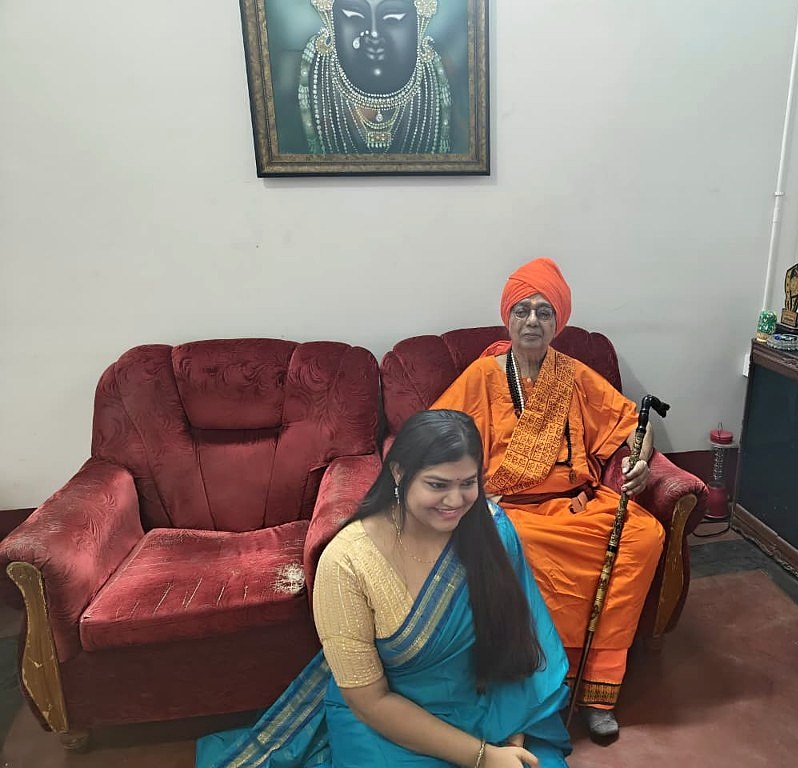
The guru
A guru in this sense is a teacher of books and a living bridge between the disciple and the Divine, who accepts responsibility for the disciple’s path. At the Ashram that person is Sri Meenananda Tirthanath. Write; then sit with him.
Shree Meenananda Foundation
Dīkṣā is spiritual initiation: a guru accepts a disciple into a lineage. At this Ashram it is given in person. Write from this page to begin the conversation.
Diksha is a personal spiritual initiation received from Guruji at this Ashram. Write in your own words, then come to Gopikantapur if invited.
Initiation
In Hindu spiritual life, dīkṣā is the sacred ceremony of initiation. It marks entry into a lineage (sampradāya) and the guru’s acceptance of a disciple. Many traditions speak of it as a second birth: the seeker steps from ordinary wandering onto a path of sādhanā.
The Sanskrit is often read from two roots. Dā, “to give,” points to the bestowal of divya jñāna — a knowledge the books alone cannot hand over. Kṣi, “to destroy,” points to the burning of ignorance and the weight of leftover karma. Together they name a double motion: something falls away, something wakes.
At Shree Meenananda Ashram, Guruji — Sri Meenananda Tirthanath — gives diksha to those who sincerely wish to learn Tantra. Write here. Speak with the Ashram. If the path continues, it continues in person at Gopikantapur. Diksha is a personal transmission received directly from the Guru; contact the Ashram to begin the conversation.
A guru in this sense is a teacher of books and a living bridge between the disciple and the Divine, who accepts responsibility for the disciple’s path. At the Ashram that person is Sri Meenananda Tirthanath. Write; then sit with him.
Most initiations centre on mantra-dīkṣā: a sacred sound given into the disciple’s keeping, to be repeated as japa. This page will not print a restricted bīja or an initiated sequence. If a mantra is to be given, it is given by the guru, in person, not by NEXUS or Sahadeva.

Initiation is a two-way covenant. Traditions may ask for daily japa, a disciplined diet, truthfulness, and non-violence. What this Ashram actually asks is spoken in person. This website does not publish a vow list or sell a lifestyle package.
Older texts name several ways a guru may transmit. They are listed here as public vocabulary. This page does not say which sitting Guruji will use, and it does not offer any of them through the screen.
By speech
The guru gives the mantra and the instruction by mouth.
By touch
Śaktipāta by the guru’s hand on the head or heart. Named in the books; not performed by this website.
By sight
A concentrated, compassionate gaze. Rare in the telling. Not a photograph, and not a livestream.
By thought
Initiation by intent and distance-grace, spoken of as uncommon. A chatbot’s reply is not this.
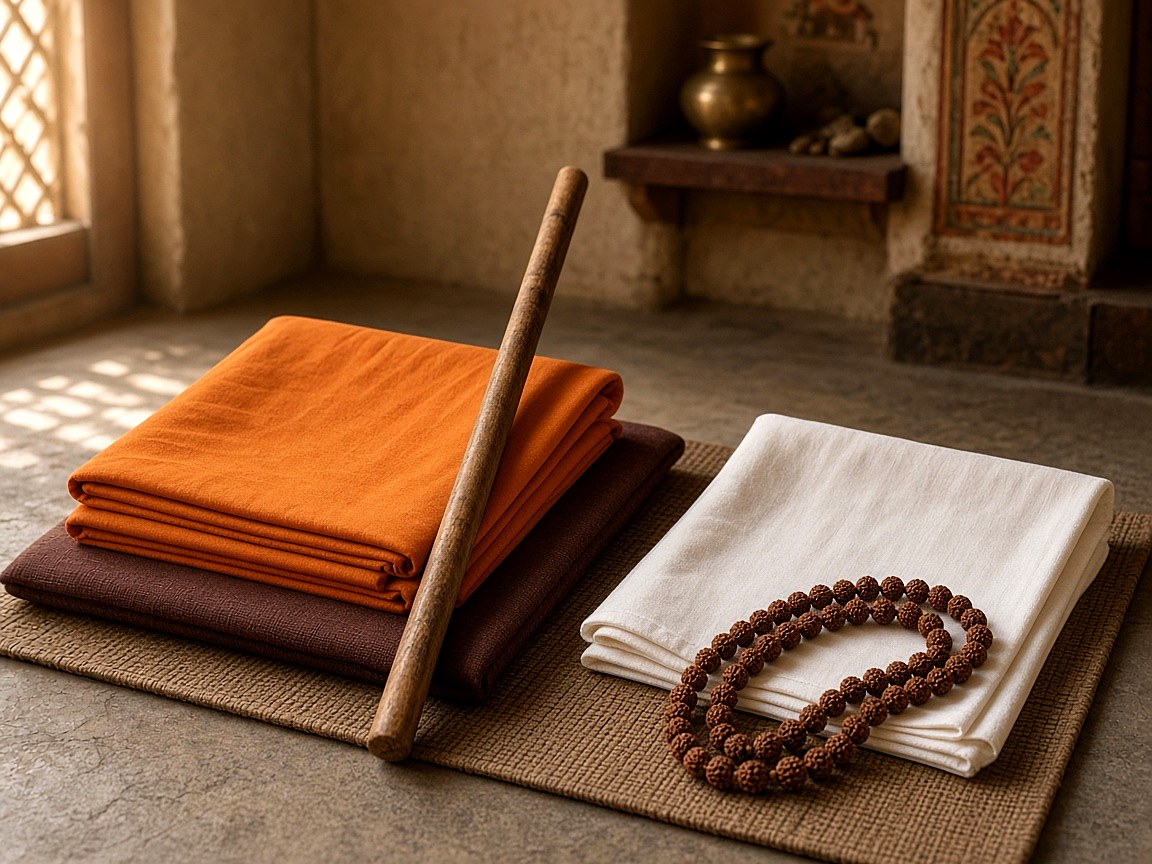
Names differ by sampradāya. What a householder, a monk, or a Tantric aspirant receives is not one product. Enquire what this Ashram actually offers; do not assume sannyāsa or a listed rite from a webpage.
Often the initiation of householders (gṛhastha): a daily mantra while family and work continue. Common in public description. Not automatically granted by sending this form.
Initiation into renunciation: gerua cloth, vows of a monk’s life. A public Hindu category. If the heart asks for that life, speak with Guruji in person.
Spoken of in Śaiva and Tāntrika streams as sequential permissions for deeper rite. Named here as vocabulary. The living paddhati of this Ashram is received in person from the Guru.
Public teaching holds dīkṣā as keys for a vehicle: a lineage’s protection, a method of meditation, and the guru’s grace. By thinning ignorance and sharpening the intellect, it turns a wanderer toward the life of a sādhaka.
If you sincerely wish to learn Tantra in the Ashram, ask. A member of the Ashram will read. Diksha is a personal transmission received directly from the Guru; contact the Ashram to begin the conversation.
To enquire about diksha, write to the Ashram in your own words. Briefly introduce yourself, explain what has drawn you to the path, and provide a telephone number at which you may be reached. A member of the Ashram will respond. Initiation is personal and is not automatic.
Membership application · Contact · The Ashram path
Thank you. Your message has been received. We will reply if you provided contact details. This form did not request a card payment or UPI PIN.
Please call the Ashram before travelling to confirm visiting and programme timings. +91 9831117349
Ask about visiting, puja, kirtan and other Ashram activities. For diksha, contact the Ashram directly.