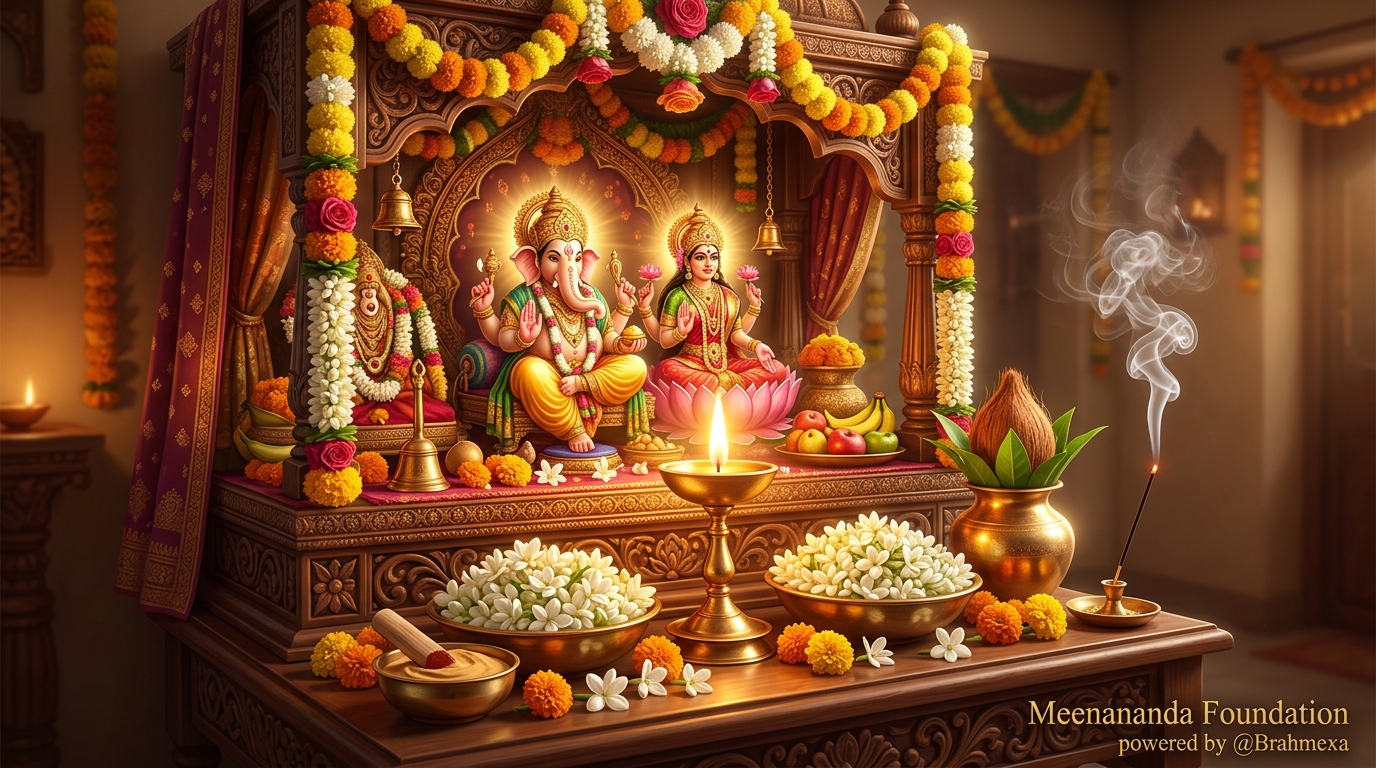
Explore eight household pujas with materials, suggested steps and mantras in three scripts. Print a guide or contact the Ashram about its own practices.
A quiet study room of the Ashram — Jyotish, paddhati, mantra and related desks. Sit, learn, then write to the living house.
These guides cover daily worship, Ganesh, Saraswati, Lakshmi, Kali, Shiva abhishekam, marriage and shraddha. Each one lists materials, a typical sequence and familiar mantras in three scripts. Print the guide you need. Contact the Ashram for details of its own practices.
Household study outlines for daily worship at home. Print a guide, keep a lamp, and sit. For the Ashram’s own paddhati, write to the shrine. Diksha is a personal transmission received from the Guru; contact the Ashram to begin.
A short daily sequence many homes already keep: sit, sip, remember Ganesha, offer to the family ishta, light a lamp, and bow. Keep it small enough to actually do every morning.
Bengal and other homes. Bengal homes often face east at dawn. Other regions keep the same limbs — water, flower, lamp — toward the wall the family already uses as the shrine.
Materials
Needed
Clean seat facing east or north
Needed
Water for achamana
Needed
One lamp with oil or ghee
If the house has it
Flower, incense, and a little naivedya already in the kitchen
Typical household sequence
Wash hands and face. Sit facing east or north if the room allows it.
Achamana: three small sips of water with a quiet sankalpa — “I offer this puja.”
Remember Ganesha so the day’s work opens with a clear beginning.
Offer flower, incense or a lamp to the family ishta — Kali, Shiva, Vishnu, or whoever the house keeps.
Naivedya: fruit, sweets or cooked food already prepared for the household.
Aarti with a single diya. Pranam. Share prasad as food of the sitting.
Public mantra (Devanagari · Bangla · IAST)
ॐ गं गणपतये नमः
ওঁ গং গণপতয়ে নমঃ
oṃ gaṃ gaṇapataye namaḥ
Diksha is a personal transmission received from the Guru; contact the Ashram to begin. Call before travelling so the Ashram can welcome you.
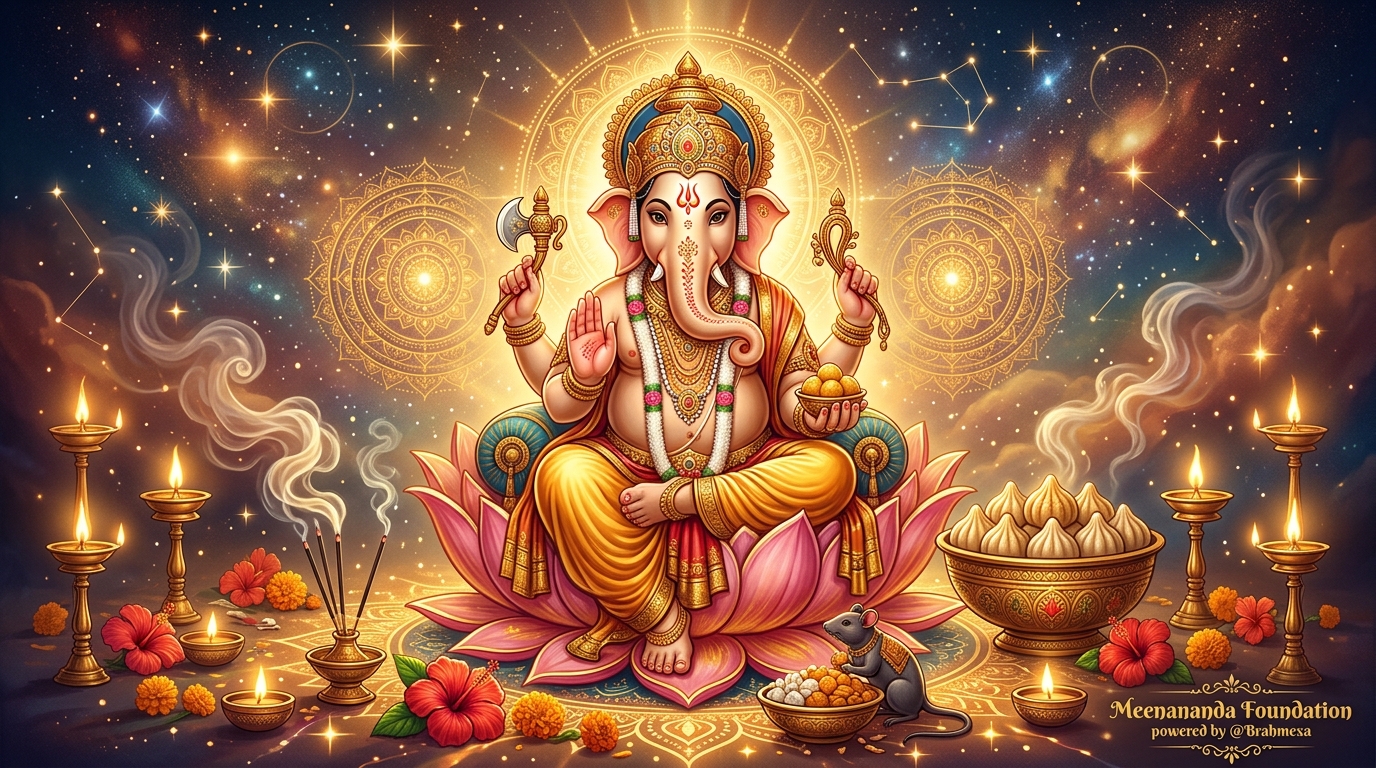
Ganesh puja
Beginnings, study, work
Ganesha is remembered at the start of study, travel, a new ledger, or a rite. A clay or metal murti, a red or yellow cloth, durva grass when the garden has it, and modaka when the kitchen already made sweets.
Bengal and other homes. Maharashtra and much of the west keep Ganesh Chaturthi as the great public day. Bengal homes remember him at every sitting, with a fuller puja when a journey or a new book of accounts begins.
Materials
Needed
Murti or a printed image on a slightly raised seat
Needed
Water, flower, incense, lamp
If the house has it
Durva in odd numbers, modaka or any household sweet, red or yellow cloth
Typical household sequence
Place the murti on a clean, slightly raised seat. Face east if you can.
Sankalpa in ordinary language: name, date, and why you are sitting.
Avahana and a simple prana-pratishtha only if your family already does it; otherwise bow and begin.
Offer water, flower, incense, lamp, and a sweet. Durva in odd numbers if available.
Circle the lamp. Ask for a clear beginning.
Visarjana or daily care of a household murti — follow the custom you actually keep.
Public mantra (Devanagari · Bangla · IAST)
ॐ श्री गणेशाय नमः
ওঁ শ্রী গণেশায় নমঃ
oṃ śrī gaṇeśāya namaḥ
Diksha is a personal transmission received from the Guru; contact the Ashram to begin. Call before travelling so the Ashram can welcome you.
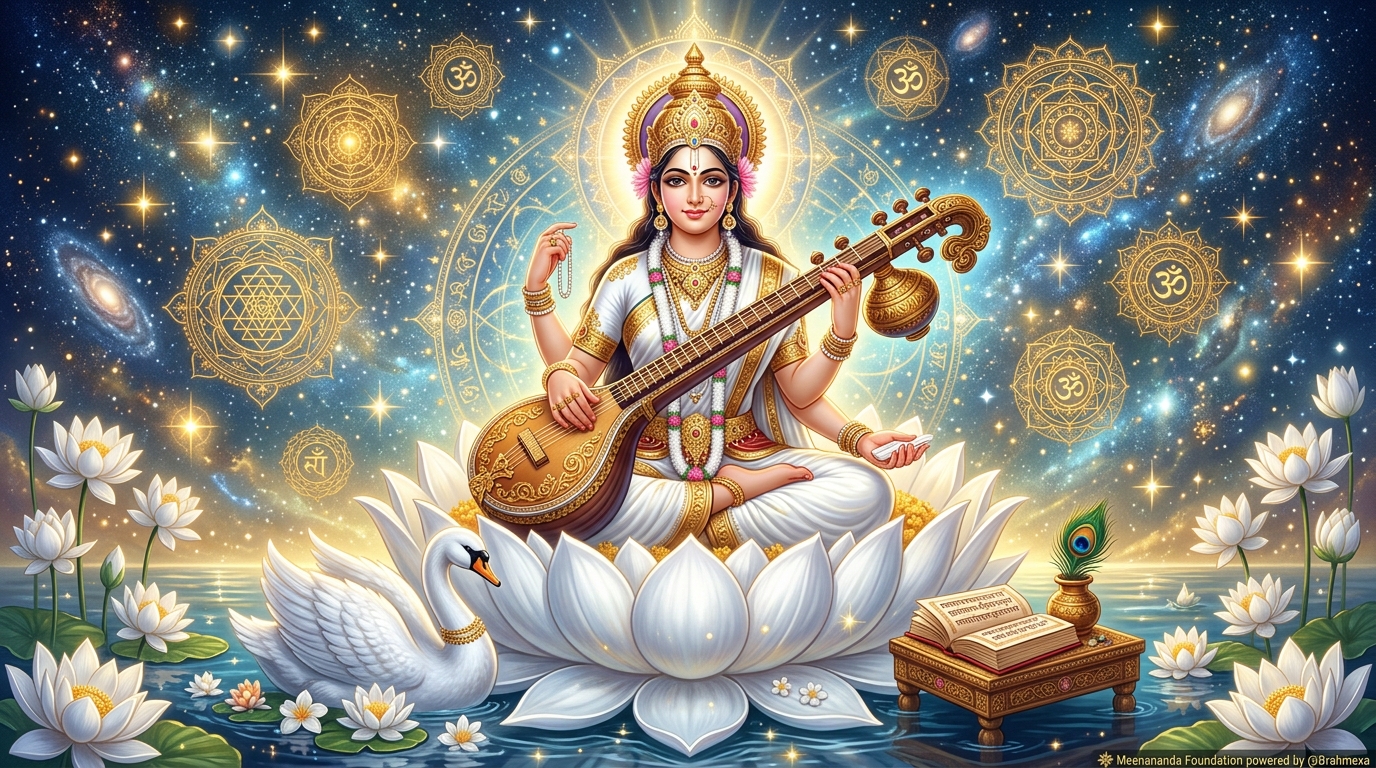
Saraswati puja
Learning and the arts
Saraswati puja is the public festival of books, instruments and the white seat of learning. In Bengal this is often Vasant Panchami. Children place notebooks before the murti. The rite asks for viveka; then open a page and read.
Bengal and other homes. Bengal keeps Sri Panchami / Vasant Panchami as the great book-day. Other regions also honour her on Navaratri and at the start of a course of study.
Materials
Needed
White or pale-yellow cloth
Needed
Books, pens or an instrument you actually use
If the house has it
White flowers, sweets already cooked, a kalash
Typical household sequence
A clean white or pale-yellow cloth. Books, pens or an instrument you actually use.
The murti or a kalash with a white flower.
Offer white flowers, incense and a lamp. Sweets if the household already cooked them.
Place the year’s study tools before her. Leave them overnight if that is your custom.
Chant the public bijakshara below. Then read a page aloud — worship includes study.
The next morning, take the books back to work.
Public mantra (Devanagari · Bangla · IAST)
ॐ ऐं सरस्वत्यै नमः
ওঁ ঐং সরস্বত্যৈ নমঃ
oṃ aiṃ sarasvatyai namaḥ
Diksha is a personal transmission received from the Guru; contact the Ashram to begin. Call before travelling so the Ashram can welcome you.
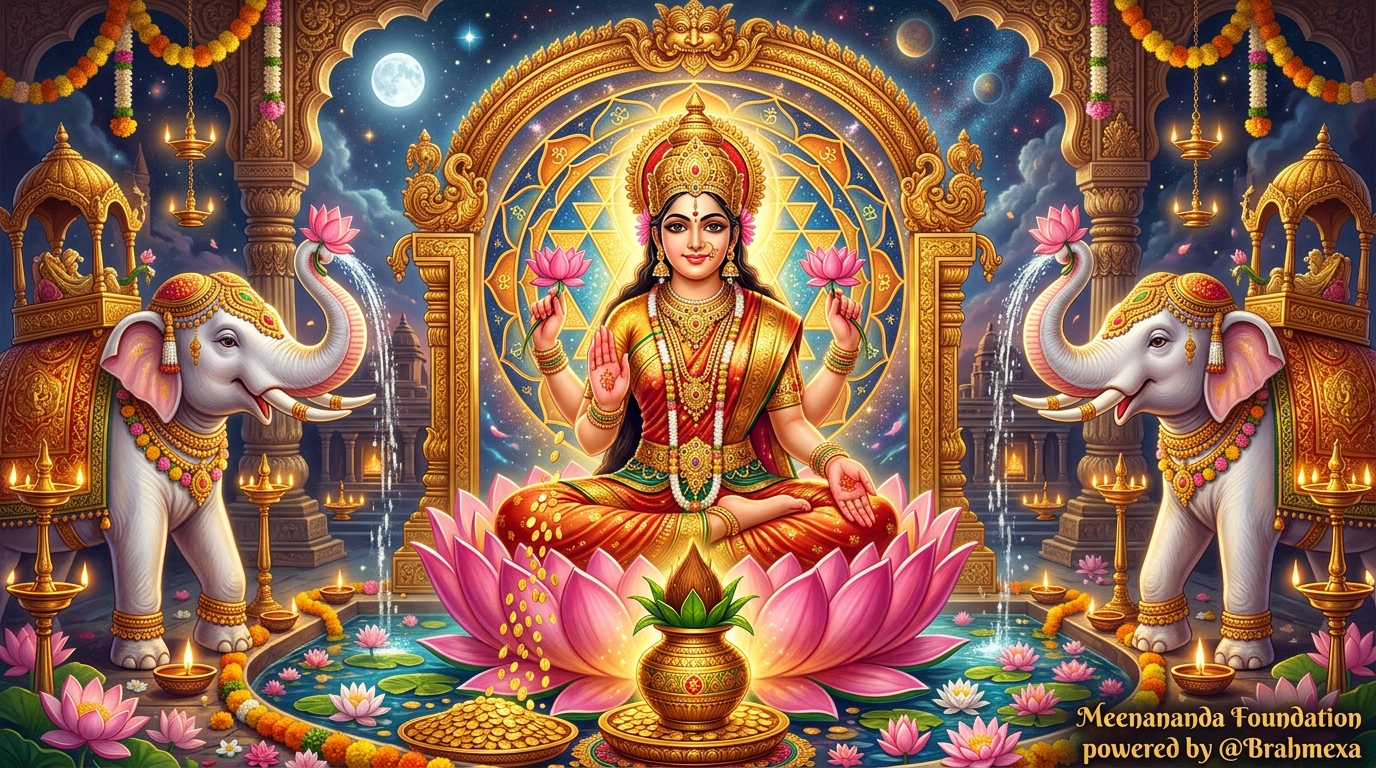
Lakshmi puja
Household prosperity
Lakshmi is welcomed as order, cleanliness and honest livelihood — Dipavali in much of India, Kojagari in Bengal. Polish the lamps. Open the account book if the house keeps one. Prosperity here begins with a clean floor.
Bengal and other homes. Bengal keeps Kojagari Lakshmi on Ashwin Purnima, and many homes also welcome her beside Kali on Dipanvita night. North India keeps the great Lakshmi puja on Dipavali Amavasya. Follow the calendar of your house.
Materials
Needed
Swept threshold and a lamp at the door
Needed
Kalash with water and rice
If the house has it
Coins the family already owns, lotus or red flower, newly washed cloth, hali-khata
Typical household sequence
Sweep and light the threshold.
Kalash, coins the family already owns, rice, and a lotus or red flower if available.
Invite Lakshmi with Ganesha at her side if that is your custom.
Offer lamp, incense, sweets and a new or newly washed cloth.
If you keep a hali-khata, write the date.
Share prasad. Keep the lamps safely tended.
Public mantra (Devanagari · Bangla · IAST)
ॐ श्रीं महालक्ष्म्यै नमः
ওঁ শ্রীং মহালক্ষ্ম্যৈ নমঃ
oṃ śrīṃ mahālakṣmyai namaḥ
Diksha is a personal transmission received from the Guru; contact the Ashram to begin. Call before travelling so the Ashram can welcome you.
Kali puja
Household night of Maa
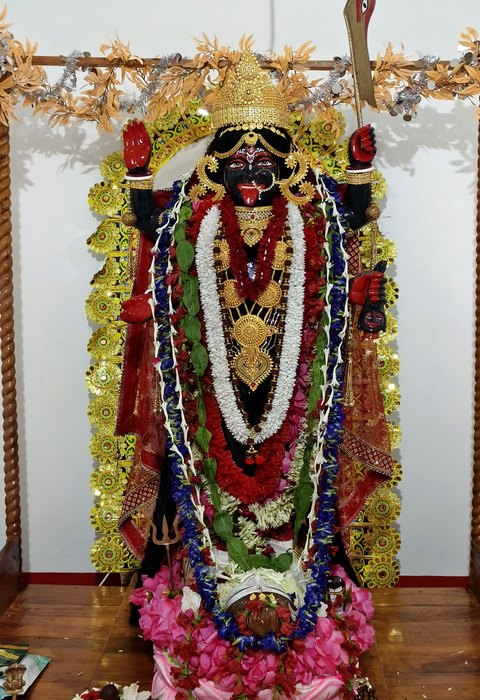
Kali Puja is the heart of this Ashram’s public worship. At home, Bengal keeps Dipanvita Amavasya as Maa’s night: a lamp, a red flower when the garden has it, incense, and the food the family already cooked. Sit before the image the house keeps. For the Ashram sitting, call so the shrine can welcome you.
Bengal and other homes. Bengal’s great Kali night is Dipanvita Amavasya (in the 2026 Bisuddha Siddhanta panjika, 8 November). Other regions keep Kali on other tithis. The public worship dates of this house live on the festivals page.
Materials
Needed
The family image or murti of Maa, a clean seat, one lamp
Needed
Incense, water, and naivedya already prepared
If the house has it
Red hibiscus or any red flower, sindur if the house already uses it
Typical household sequence
Clean the seat. Face the family image of Maa. Light one lamp.
Sankalpa in ordinary language: name, date, and that this sitting is for Maa.
Offer water, incense, and a red flower if you have one.
Naivedya is the dish the household already cooked. Offer it with both hands.
Chant the public namaskara below. Sit a little in silence.
Share prasad. For the Ashram’s Kali night, open the festivals page and telephone before you travel.
Public mantra (Devanagari · Bangla · IAST)
ॐ श्री कालीकायै नमः
ওঁ শ্রী কালীকায়ৈ নমঃ
oṃ śrī kālīkāyai namaḥ
Diksha is a personal transmission received from the Guru; contact the Ashram to begin. Call before travelling so the Ashram can welcome you.
Shiva abhishekam
Linga bathing sequence
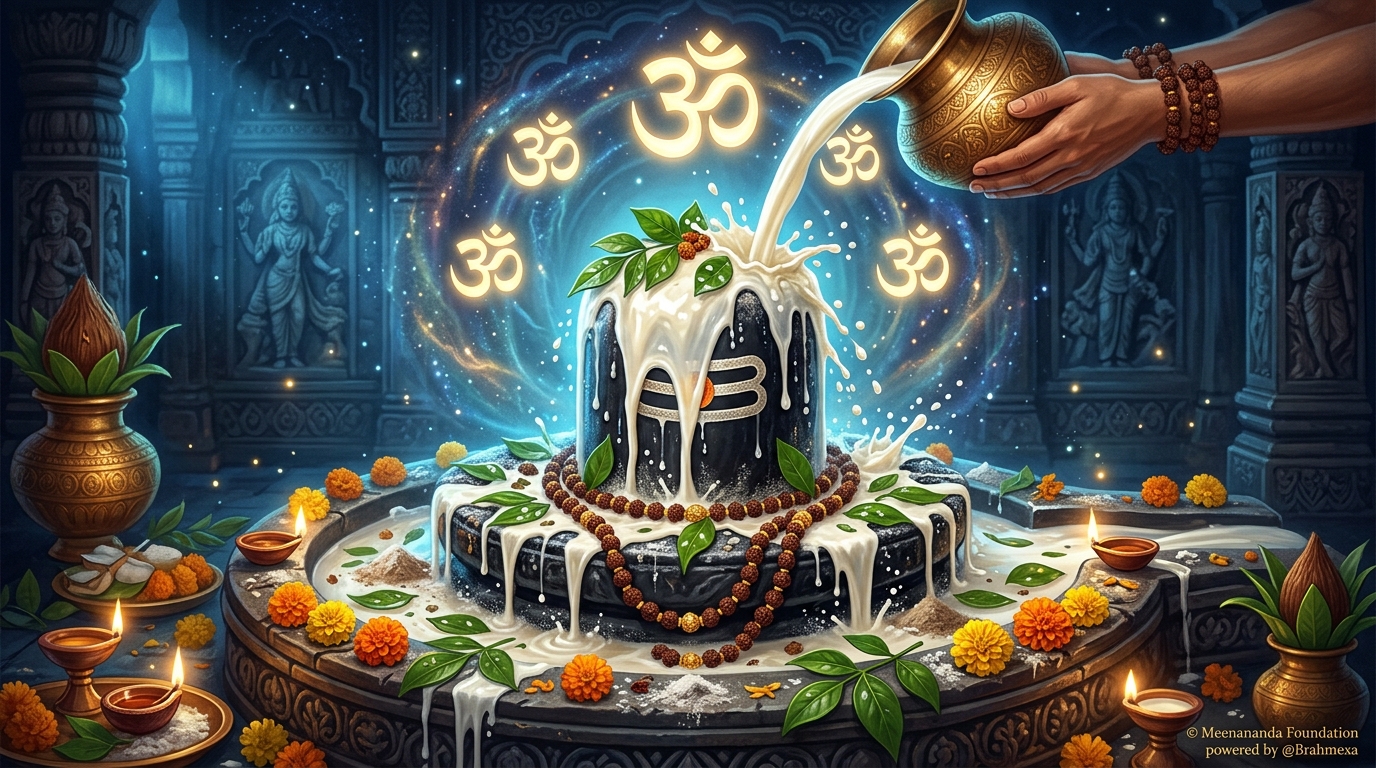
Abhisheka is the bathing of a linga or a Shiva image with water and, where the house can afford it, a little milk. Mondays and Maha Shivaratri are common public days. Use what you have. Keep quantities small enough to catch the runoff.
Bengal and other homes. Bengal and the east often keep a household linga with bel patra. Maha Shivaratri is the great public night across India.
Materials
Needed
A stable linga or photo on a plate that can take water
Needed
Water first, always
If the house has it
A little milk, bel patra, flower, incense
Typical household sequence
A stable linga or photo on a plate that can take water. Sit where spill will honour the floor.
Sankalpa. Then water first — always water before milk.
If you offer milk, yogurt, honey or ghee, keep quantities small and catch the runoff.
Rinse again with water. Offer bel patra if you have it, then flower and incense.
A lamp. The five-syllable public mantra below. Silence after is part of the rite.
Wipe the murti dry. A drop of the water may go to a plant.
Public mantra (Devanagari · Bangla · IAST)
ॐ नमः शिवाय
ওঁ নমঃ শিবায়
oṃ namaḥ śivāya
Diksha is a personal transmission received from the Guru; contact the Ashram to begin. Call before travelling so the Ashram can welcome you.
Vivaha samskara
Marriage outline
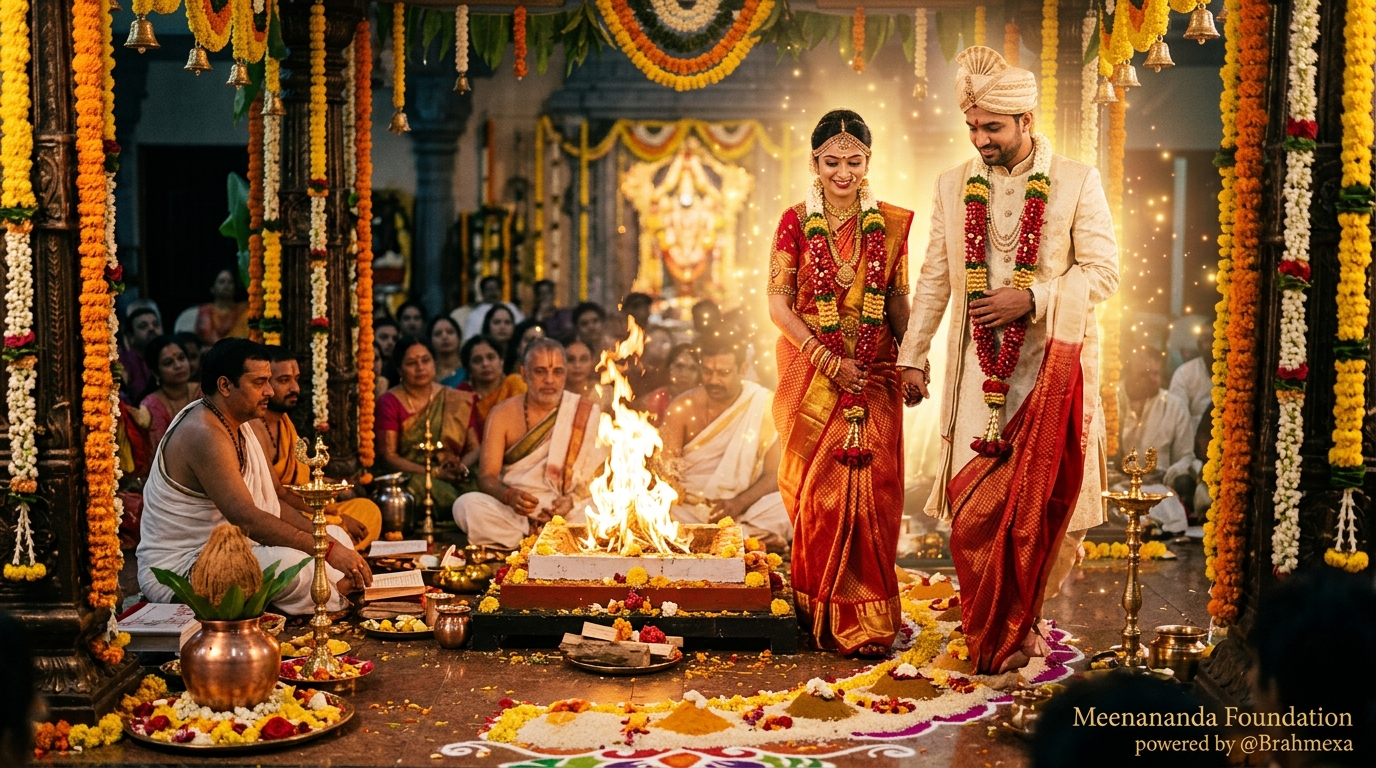
Vivaha is a samskara carried by families, a priest or elder, and the couple. What follows is a public map of common North-Indian and Bengali steps so a student can recognise names. A living priest holds the full mantras; registration sits beside the rite.
Bengal and other homes. Bengal often keeps mala-badal and satpak. Much of North India keeps panigrahana and saptapadi. Names differ; the families name the sequence they actually keep.
Materials
Needed
The couple, both houses, and a priest or elder the families trust
If the house has it
Fire for homa when a fire priest is present, sindur, garlands
Typical household sequence
Ganesh puja and sankalpa. The couple and both houses should know what they are consenting to.
Kanyadan or the regional equivalent only as the families actually practise it — names differ.
Homa if a fire priest is present.
Panigrahana and saptapadi, or the Bengali mala-badal / satpak sequence your region uses.
Sindur, blessings of elders, and the public opening mantra below.
Feast, and the civil registration the families already arranged.
Public mantra (Devanagari · Bangla · IAST)
ॐ श्री गणेशाय नमः
ওঁ শ্রী গণেশায় নমঃ
oṃ śrī gaṇeśāya namaḥ
Diksha is a personal transmission received from the Guru; contact the Ashram to begin. Call before travelling so the Ashram can welcome you.
Shraddha & tarpana
Ancestral offering
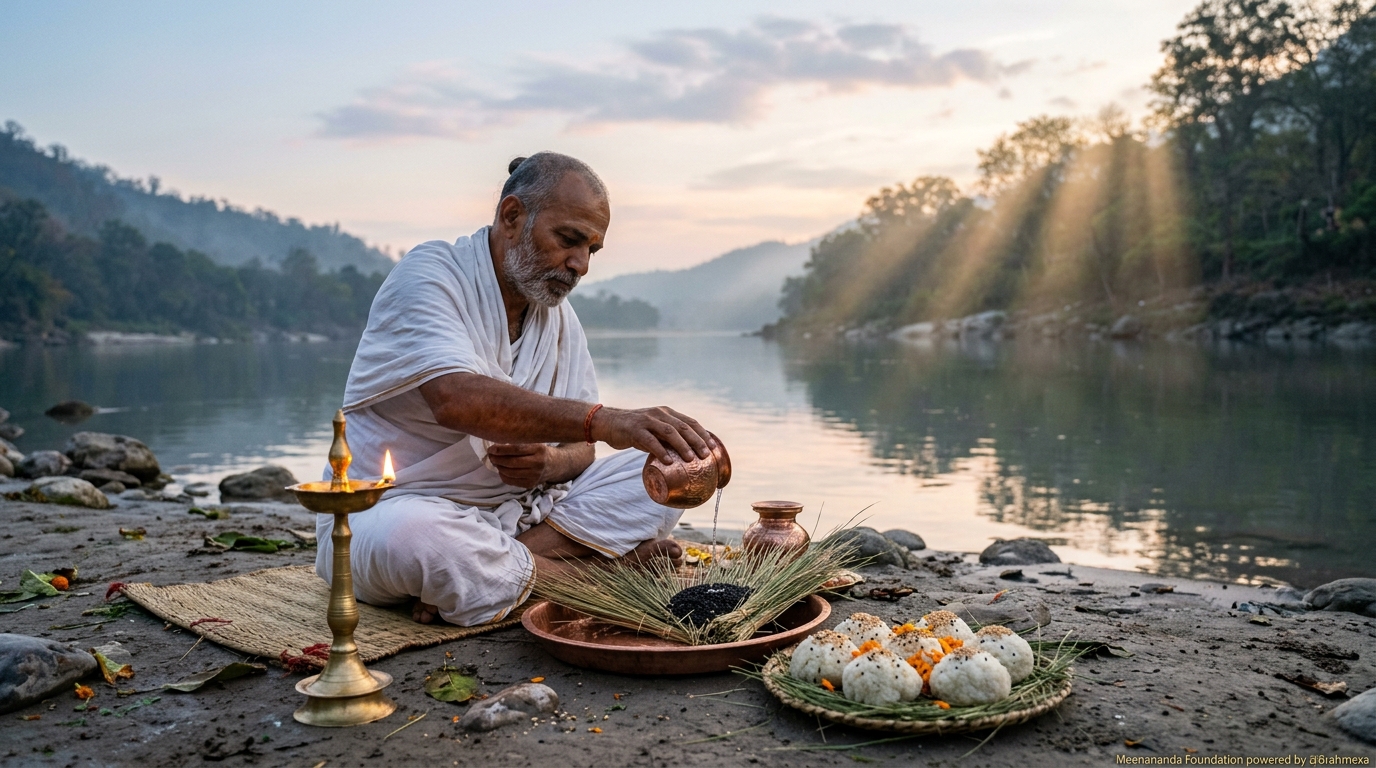
Shraddha and tarpana are offerings of water, sesame and food in the name of the departed. They are acts of memory and duty. Follow the family priest or the custom of your house. This page names the public gesture.
Bengal and other homes. Bengal often keeps pinda and a feeding of guests. Other regions vary the seat and the direction. A priest of the house names the gotra and the day.
Materials
Needed
Clean seat, water, the name of the person remembered
If the house has it
Kusha, black sesame, cooked rice or pinda as practised
Typical household sequence
A clean seat, preferably facing south for this rite if your custom says so, otherwise follow the priest.
Kusha or a simple blade of grass, water, black sesame if you keep it, and cooked rice or pinda as practised.
Name the person, the gotra if known, and the relationship.
Tarpana: water poured through the fingers with the public line below, repeated with attention.
Offer food. Feed a guest, a cow, or birds as the house already does.
Close with pranam. Grief is allowed in this sitting.
Public mantra (Devanagari · Bangla · IAST)
ॐ पितृभ्यः स्वधा नमः
ওঁ পিতৃভ্যঃ স্বধা নমঃ
oṃ pitṛbhyaḥ svadhā namaḥ
Diksha is a personal transmission received from the Guru; contact the Ashram to begin. Call before travelling so the Ashram can welcome you.
Ashram guide
Ask about visiting, puja, kirtan and other Ashram activities. For diksha, contact the Ashram directly.